What Is Gum Disease?
Ann Arbor, MI
 A healthy smile depends on more than strong, cavity-free teeth. The gums that support your teeth matter just as much, yet they often go unnoticed until a problem develops. Gum disease is one of the most common oral health issues affecting adults, and it can progress silently for years before causing noticeable pain or damage. At Greashaber Dentistry, our dental team believes understanding gum disease is the first step toward preventing it. A healthy smile depends on more than strong, cavity-free teeth. The gums that support your teeth matter just as much, yet they often go unnoticed until a problem develops. Gum disease is one of the most common oral health issues affecting adults, and it can progress silently for years before causing noticeable pain or damage. At Greashaber Dentistry, our dental team believes understanding gum disease is the first step toward preventing it.
What is Gum Disease?
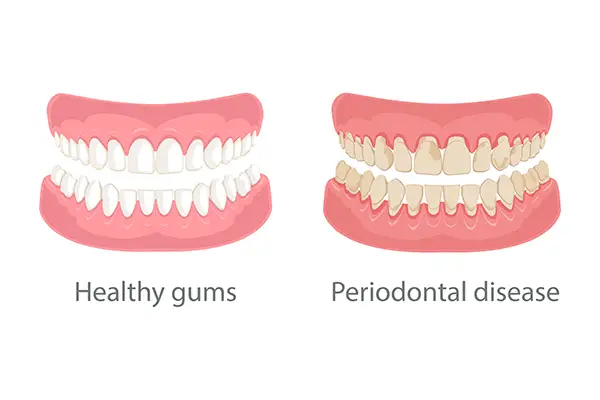
Gum disease, also known as periodontal disease, is an infection of the tissues that hold your teeth in place. It typically begins when bacteria in plaque build up along and beneath the gumline, triggering inflammation that gradually damages the soft tissue and, eventually, the bone supporting your teeth.
The condition develops in stages, starting with mild inflammation and, if unaddressed, advancing to a more serious infection that can loosen teeth and lead to tooth loss. Because early stages are often painless, many people do not realize there is a problem until it has progressed. This is why routine checkups matter: Dr. Greashaber can spot warning signs long before you notice symptoms yourself, allowing for simpler treatment.
Common signs include red, swollen, or tender gums, gums that bleed easily during brushing or flossing, persistent bad breath, gums pulling away from the teeth, and loose or shifting teeth. Some people also notice a change in how their teeth fit together when biting down. If you experience any of these symptoms, schedule an appointment with our dental team as soon as possible.
What Causes Gum Disease?
The primary cause of gum disease is plaque, a sticky film of bacteria that forms on teeth every day. When plaque is not removed through regular brushing and flossing, it hardens into tartar, which can only be removed with a professional cleaning. Tartar buildup along the gumline creates an environment where bacteria thrive, leading to irritation and inflammation.
Several other factors can raise a person's risk. Tobacco use is significant, as it interferes with the gum tissue's ability to heal and fight infection. Hormonal changes, such as those during pregnancy or puberty, can make gums more sensitive. Certain medications reduce saliva flow, which normally helps wash away food particles and bacteria, increasing the risk of plaque buildup.
Genetics also play a role, as some people are more prone to gum disease regardless of how well they care for their teeth. Crooked or misaligned teeth can be harder to keep clean, creating hiding spots for plaque, and chronic stress, poor nutrition, and certain systemic health conditions can further weaken the body's ability to fight infection. Understanding these risk factors helps our dental team develop a personalized approach to protecting your gum health.
Is Gingivitis the Same as Gum Disease?
Gingivitis and gum disease are related, but not identical. Gingivitis is the earliest and mildest stage of gum disease, when gums may appear red, swollen, and prone to bleeding, particularly during brushing or flossing. At this stage, the supporting structures of the teeth, including the bone, have not yet been affected.
The encouraging news is that gingivitis is reversible with prompt attention. Improved oral hygiene at home, combined with a professional cleaning, can often restore the gums to a healthy state.
If left untreated, gingivitis can advance into periodontitis, a more serious and irreversible form of gum disease in which infection spreads below the gumline, damaging the connective tissue and bone anchoring the teeth. Its progression can be managed and slowed with proper treatment, but not fully reversed. This is why our dental team encourages patients not to ignore early symptoms like bleeding or tender gums, since catching the condition at the gingivitis stage offers the best chance for a full recovery.
Treating Gum Disease
Treatment depends on how far the condition has progressed. For gingivitis, treatment usually involves a professional cleaning to remove plaque and tartar, along with guidance on improving daily brushing and flossing. In many cases, this is enough to restore gum health.
For more advanced gum disease, a deeper cleaning procedure called scaling and root planing may be recommended. Scaling removes plaque and tartar from above and below the gumline, while root planing smooths the tooth roots to help the gums reattach properly. This is often performed over multiple visits and can significantly reduce inflammation.
In cases of more severe periodontitis, additional treatment may be needed to restore gum and bone health. Our dental team will evaluate the extent of the disease and recommend a course of action tailored to your needs. Ongoing maintenance visits allow our team to monitor gum health and catch any recurrence early, and consistent follow-up care combined with diligent at-home hygiene gives patients the best chance of maintaining healthy gums long term.
Preventing Gum Disease
Preventing gum disease starts with a consistent oral hygiene routine. Brushing at least twice a day with a soft-bristled toothbrush, along with daily flossing, helps remove the plaque that leads to inflammation. An antimicrobial mouth rinse can add an extra layer of protection by reducing bacteria in the mouth.
Routine checkups and professional cleanings are equally important, as they allow our dentist to remove hardened tartar that brushing alone cannot eliminate, and to catch early signs of gum disease before they progress.
Lifestyle choices also make a difference. Avoiding tobacco products, eating a balanced diet, and managing stress all support the body's ability to fight off infection, while staying hydrated helps maintain healthy saliva flow that naturally protects the gums and teeth.
By combining good daily habits with regular professional care, most cases of gum disease can be prevented entirely, or caught early enough to treat with minimal intervention.
Greashaber Dentistry - Your Partner in Healthy Gums
Gum disease is common, but it does not have to be inevitable. With attentive daily care and regular visits to our office, you can protect your gums and keep your smile strong for years to come. If it has been a while since your last checkup, or if you have noticed any changes in your gum health, we encourage you to reach out. Contact Greashaber Dentistry at (734) 519-7978 to schedule an appointment with our dental team today. |